Everyday Lives Documentary Archives
Loading the documentary experience…
Photography and text are prioritized. Interactive geographic context loads only when needed.
Everyday Lives Documentary Archives
Photography and text are prioritized. Interactive geographic context loads only when needed.
Learn
Begin with the photographs, then go deeper when curiosity arises. These articles provide historical, geographic, religious, social and cultural context without interrupting the immediate photographic experience.
Learn moves from India-wide orientation to regional and city histories and then to the particular practices, objects and activities visible in the documentary record. Articles distinguish observation, recollection, belief, history and interpretation, and substantial entries provide sources and further reading.
The articles are original editorial syntheses prepared for Everyday Lives. Sources are used to verify factual context and guide further reading; quoted or distinctive borrowed material must be attributed rather than presented as archive prose.
Explore by subject
A concise historical framework for understanding how the modern Indian state emerged from much older civilizations, kingdoms, empires, colonial rule, independence, Partition and constitutional change.
Knowledge
A concise guide to the long historical process that produced the modern Indian state — from older kingdoms and empires through Mughal, Company and British rule, independence, Partition and the republic.
Knowledge
A short orientation to the civilizations, religious movements, empires and regional kingdoms that shaped the subcontinent before the sixteenth century.
Knowledge
How Mughal rule reshaped politics, architecture, court culture and everyday life without ever making the subcontinent politically uniform.
Knowledge
How a trading company became a territorial power, how Crown rule followed 1857, and how colonial government changed the subcontinent.
Knowledge
From the end of British rule in 1947 through Partition and the adoption of the Constitution to the Republic of India in 1950.
Knowledge
A reader’s introduction to the constitutional framework of the Republic of India, fundamental rights, federalism and democratic government.
Knowledge
Why India cannot be understood through one language: language families, scripts, multilingual life, Hindi, English and the constitutionally recognized languages.
Explore by subject
Understand the cities and regions in the photographs through urban history, geography, language, architecture, migration and changing cultural life.
Knowledge
Mountains, plains, deserts, coasts, plateaus, rivers and monsoon systems help explain why India’s landscapes, agriculture, clothing and everyday life vary so dramatically by region.
Knowledge
Delhi as a succession of capitals: Sultanate and Mughal power, British New Delhi, Partition-era transformation and the political life of the modern republic.
Knowledge
The Yamuna city that became a major Mughal capital, home to the Taj Mahal and Agra Fort but also to living neighbourhoods, crafts and later colonial change.
Knowledge
From the older Rajput court at Amer to Jai Singh II’s planned eighteenth-century city of Jaipur, with architecture, astronomy, craft and modern Rajasthan.
Knowledge
A Rajasthan pilgrimage town organized around a sacred lake, temples, ritual bathing and the social and commercial worlds of the Pushkar fair.
Knowledge
The history of a fifteenth-century Marwar capital, its fortress, trade, craft and the evolving visual identity of the “Blue City.”
Knowledge
A fortified city of the Thar Desert shaped by caravan trade, sandstone architecture, Jain and Hindu traditions and the modern pressures of tourism.
Knowledge
How islands and harbour, colonial trade, industry, migration, cinema and finance produced one of the world’s great metropolitan regions.
Knowledge
A west-coast region shaped by Indian Ocean trade, more than four centuries of Portuguese colonial rule, Hindu and Christian traditions, language, food and post-1961 change.
Knowledge
A port region where Kannada, Tulu, Konkani and Beary-speaking communities, temples, churches, mosques, fisheries and Indian Ocean trade meet.
Knowledge
Indian Ocean trade, Jewish, Christian, Muslim and Hindu histories, Portuguese and Dutch colonial layers, Malayalam culture and the maritime setting of Kerala.
Knowledge
Historical and cultural context for a central Indian state with significant Adivasi populations, forest regions, craft traditions and a modern political identity dating from 2000.
Knowledge
A Bay of Bengal region shaped by Kalinga history, Jagannath traditions, temple architecture, Odia language, classical and community arts, and diverse Adivasi populations.
Knowledge
A southern region shaped by a major classical language, long temple traditions, maritime exchange, colonial Madras and one of modern India’s largest urban economies.
Knowledge
The history of a Deccan capital shaped by Persianate court culture, Telugu and Dakhni traditions, the Nizams, integration into India and contemporary technology.
Knowledge
The Sikh sacred centre built around Harmandir Sahib, the history of Punjab, colonial violence, Partition and the cultural life of a border region.
Knowledge
How a Himalayan town became closely associated with the Dalai Lama, Tibetan institutions, Buddhism in exile and a distinctive transnational community.
Knowledge
Two sacred river cities where pilgrimage, ashrams, aarti, yoga and modern tourism create very different experiences of the Ganges from Varanasi.
Knowledge
A sacred confluence city whose identities include Prayag, Mughal and colonial Allahabad, the independence movement and the immense temporary city of Kumbh Mela.
Knowledge
The medieval Chandela temple complex in central India, its Hindu and Jain monuments, famous erotic imagery and the larger religious and artistic programme often overlooked by visitors.
Knowledge
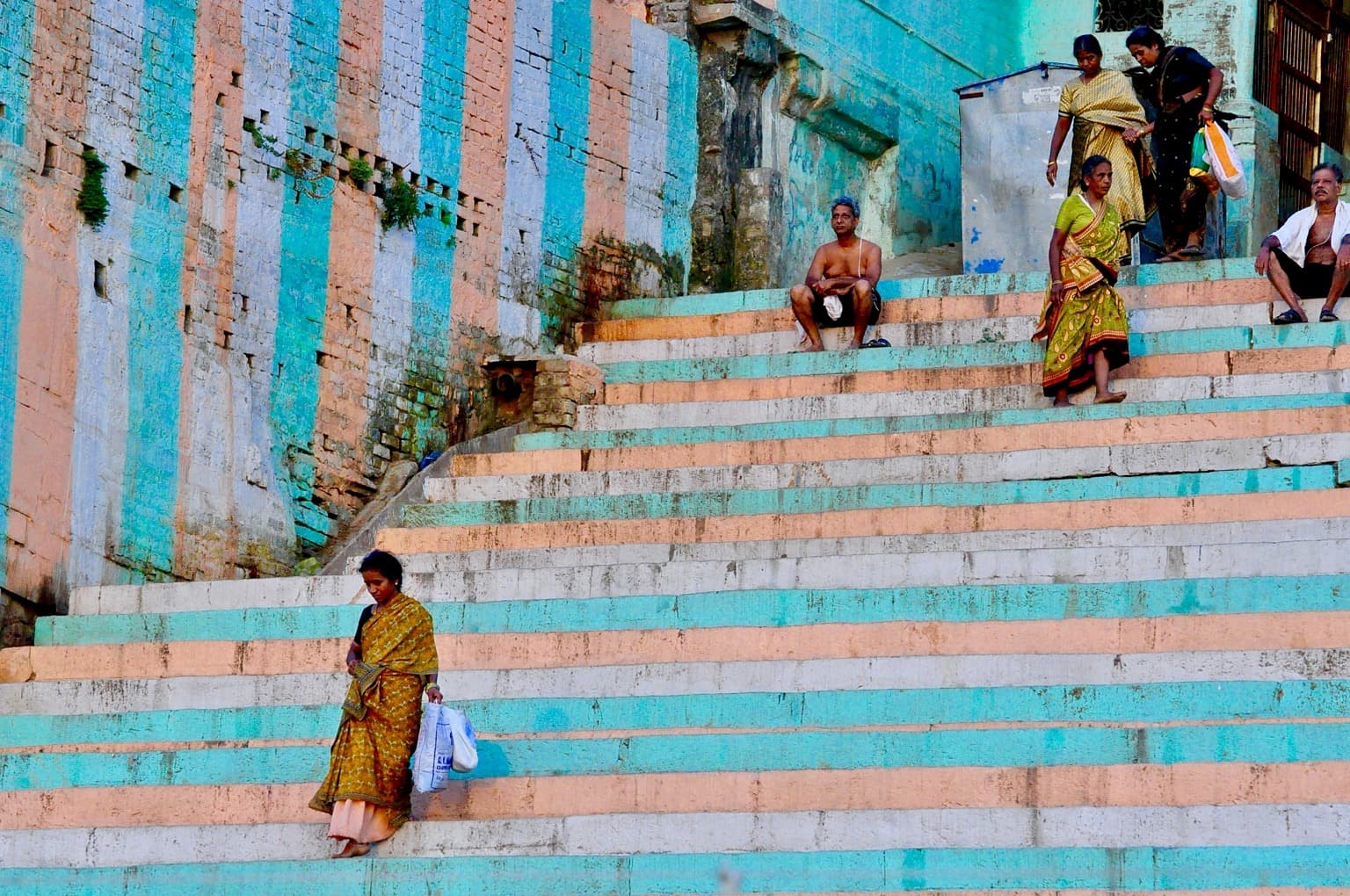
Colour in India is often architectural: painted facades, murals, shrines, temple surfaces, signs, steps and repeated repainting create public environments in which colour is built into place.
IndiaKnowledge
India has no single palette. Textile traditions, architecture, climate, craft, religion and festival practice vary sharply by region, making colour a local subject as much as a national one.
India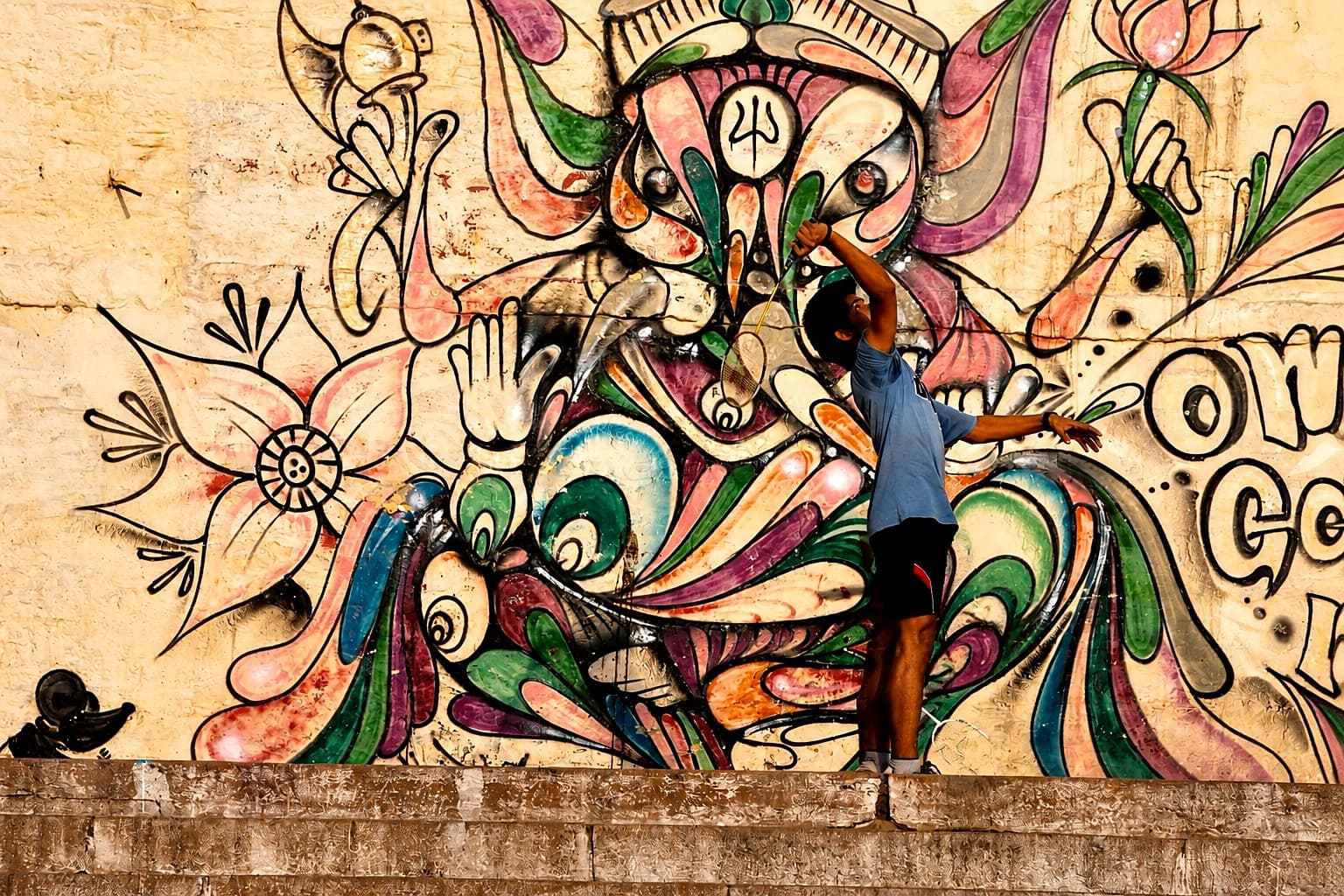
Knowledge
In Varanasi, colour emerges from clothing, painted ghats and murals, religious imagery, flowers, ritual fire, signs and the contrast between saturated details and weathered stone.
Varanasi · Uttar Pradesh · IndiaKnowledge
A concise history of Varanasi — also known as Banaras, Benares and Kashi — from ancient settlement and sacred geography to the modern city.
Varanasi · Uttar Pradesh · India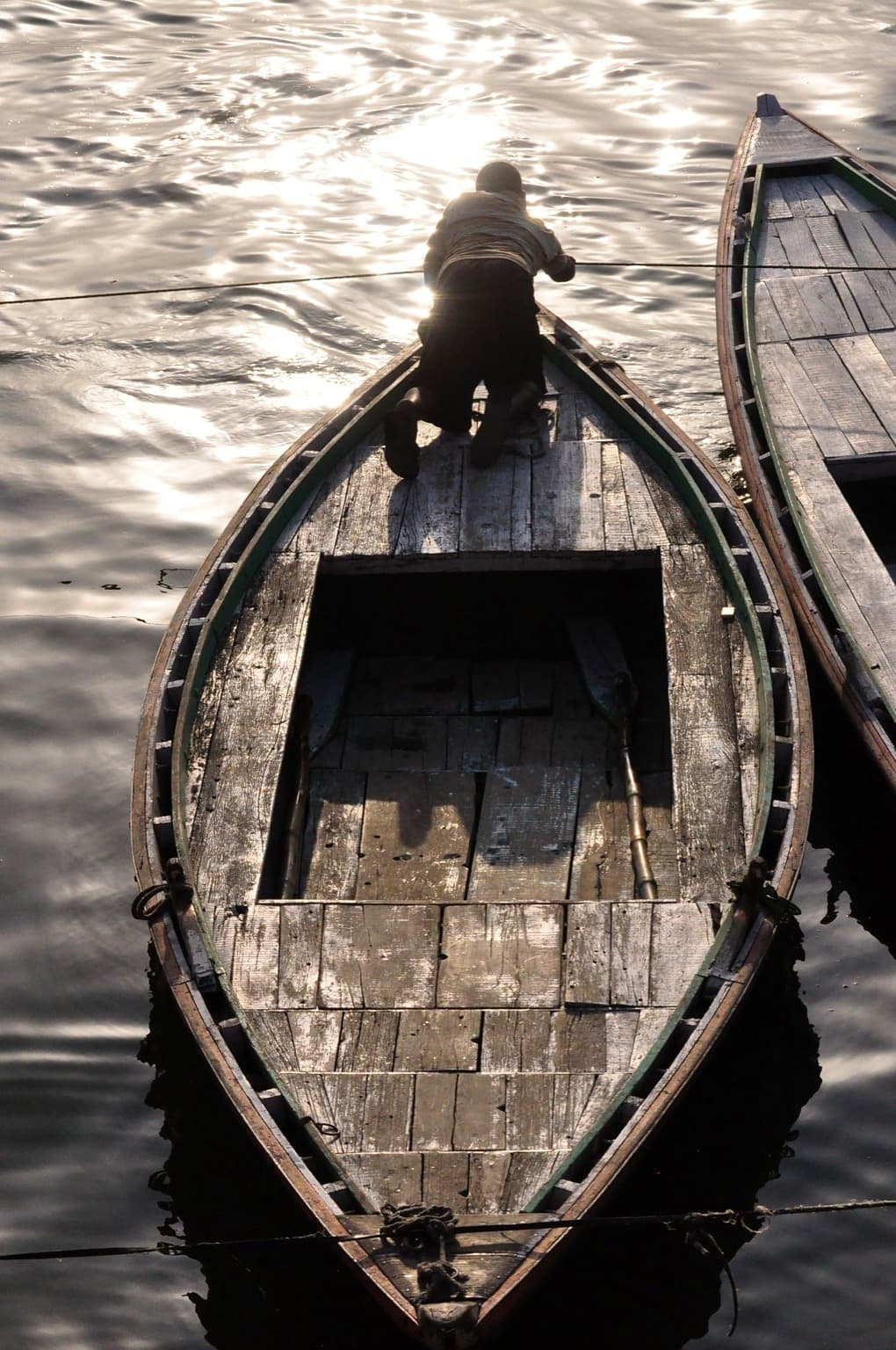
Knowledge
The Ganga as sacred presence, ecological system, working river and the physical horizon around which Varanasi’s riverfront life is organized.
Varanasi · Uttar Pradesh · IndiaKnowledge
How Varanasi’s stepped riverfront became a network of named places for worship, work, bathing, gathering, festivals and cremation.
Varanasi · Uttar Pradesh · IndiaKnowledge
Learning, music, weaving, craft and the wider religious geography that extend beyond the famous riverfront.
Varanasi · Uttar Pradesh · IndiaExplore by subject
Introductions to religious traditions and practices that appear in, or provide essential context for, the archive.
Knowledge
Cloth, flowers, pigments, lamps and painted images can carry devotional importance, but colour meanings vary by tradition, region, deity, ritual and community.
India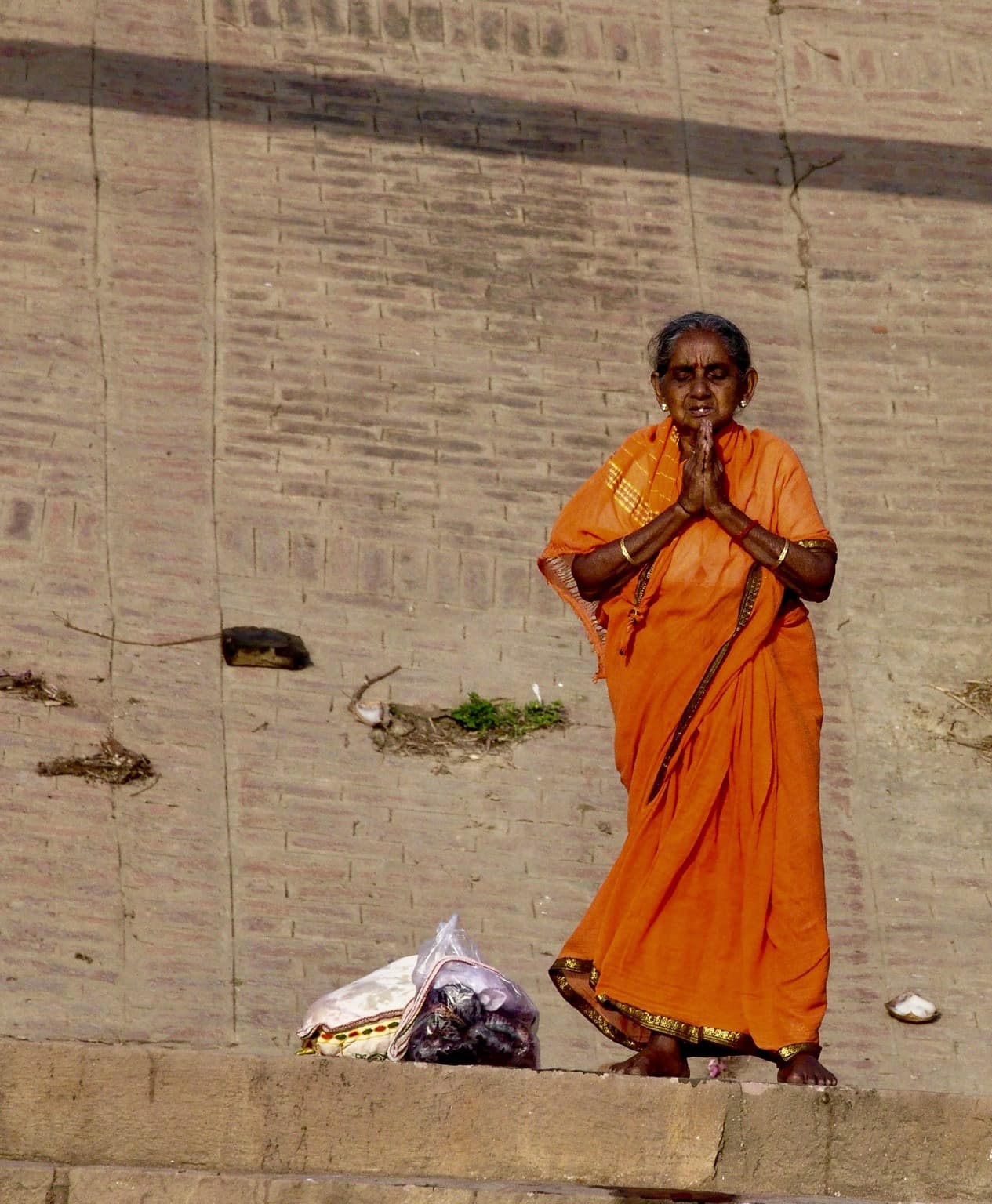
Knowledge
An introduction to the diversity of Hindu traditions, including major ideas, devotional practice, sacred texts and the many ways Hindu life is lived.
IndiaKnowledge
Shiva, the Ganges, pilgrimage, temples, ghats and the many forms of Hindu devotional life that shape Varanasi’s sacred geography.
Varanasi · Uttar Pradesh · IndiaKnowledge
An introduction to Buddhism and to Sarnath, near Varanasi, where Buddhist tradition places the Buddha’s first sermon.
Varanasi · Uttar Pradesh · IndiaKnowledge
Jain teachings of non-violence, liberation and disciplined life, together with the religious connections between Jain tradition and Varanasi.
Varanasi · Uttar Pradesh · IndiaKnowledge
An introduction to Islam and to the long presence of Muslim communities, mosques, artisans and cultural traditions within Varanasi.
Varanasi · Uttar Pradesh · IndiaKnowledge
Guru Nanak, the ten Gurus, the Guru Granth Sahib, seva, equality, the Khalsa and the living Sikh tradition.
IndiaKnowledge
Why sacred journeys matter across Indian religious traditions, from local temple visits to river bathing, circumambulation and major gatherings.
IndiaKnowledge
Religious context for Varanasi’s cremation ghats, funerary rites and traditions linking Kashi with liberation from rebirth.
Varanasi · Uttar Pradesh · IndiaKnowledge
Who Hindu ascetics are, why renunciation has many forms, and why appearance alone is not enough to identify a person as a sadhu.
India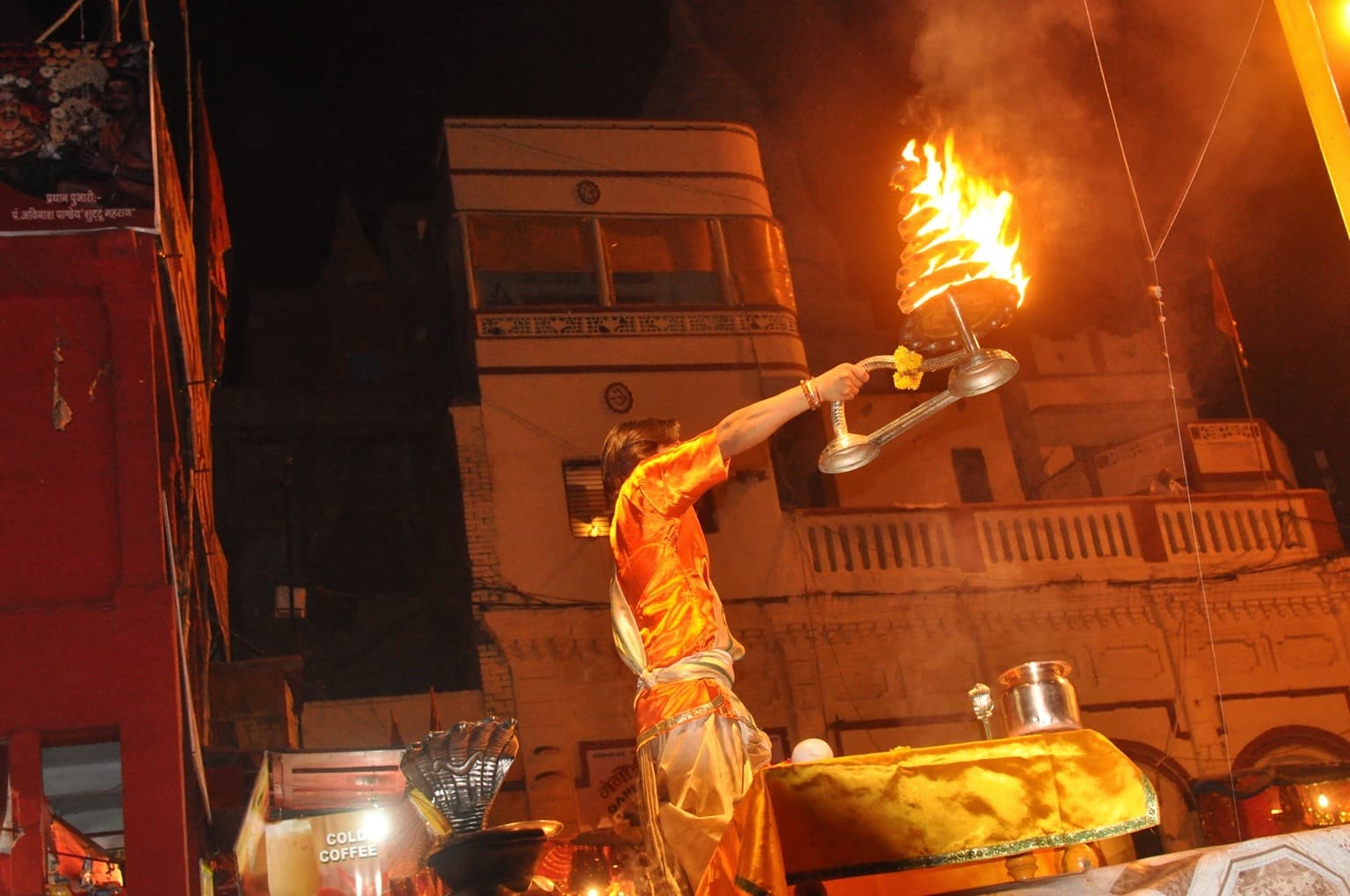
Knowledge
Context for the daily riverfront ritual of lamps, coordinated gesture, sound and reverence to the Ganges.
Varanasi · Uttar Pradesh · IndiaExplore by subject
Social structures and identities that require more care than a caption can provide.
Explore by subject
Regional cuisines, ingredients, trade, domestic practice and the social histories carried through everyday food.
Knowledge
An introduction to India’s regional foodways, grains, pulses, breads, rice, vegetarian and non-vegetarian traditions, religious practice and the histories hidden inside everyday dishes.
Knowledge
How trade, migration, empire and imported ingredients helped shape the cuisines now associated with India.
Explore by subject
Music, craft, labour, colour and cultural traditions connected to the people and places represented in the photographs.
Knowledge
An introduction to Hindustani and Carnatic classical traditions, devotional and folk music, instruments, film music and the regional diversity of musical life in India.
Knowledge
A non-technical introduction to two important organizing ideas in Indian classical music and to the role of improvisation, drone and rhythmic cycle.
Knowledge
There is no single answer: textiles, dyes, religious practice, festivals, flowers, painted surfaces, craft traditions and regional differences all contribute to the strong visual presence of colour in India.
IndiaKnowledge
Cotton, silk, indigo, madder, resist dyeing, printing, weaving and embroidery help explain why colour is so visible in Indian clothing, craft and public life.
IndiaKnowledge
Holi pigments, Diwali lamps and rangoli, painted festival images, garlands and flower markets can transform the visual character of homes, streets and sacred spaces.
IndiaKnowledge
North Indian classical music, guru-shishya transmission and Varanasi’s longstanding identity as a city of music.
Varanasi · Uttar Pradesh · IndiaKnowledge
Silk, brocade, skilled labour and the Hindu-Muslim social history behind one of Varanasi’s most celebrated craft traditions.
Varanasi · Uttar Pradesh · IndiaExplore by subject
UNESCO World Heritage and living cultural heritage explained as context, with careful distinctions between inscription, significance and everyday life.
Knowledge
What World Heritage status means, why it should not be confused with a ranking of importance, and how India’s cultural and natural sites connect to the places represented in the archive.
Knowledge
World Heritage usually concerns places; Intangible Cultural Heritage concerns living practices, knowledge and traditions. India’s inscriptions help explain festivals, music, ritual and craft visible in documentary life.
Explore by subject
How the archive describes, verifies and interprets documentary material without turning inference into fact.
Knowledge
Strong colour in photographs is shaped by the scene, but also by contrast, light, exposure, white balance, camera rendering, screens and the photographer’s framing choices.
India
Knowledge
How Everyday Lives separates observation from inference, preserves uncertainty and uses editing, captions and context without overpowering the photograph.
Knowledge
A concise guide to recurring names and terms used in the Varanasi journey and Knowledge Centre.
Varanasi · Uttar Pradesh · India