Everyday Lives Documentary Archives
Loading the documentary experience…
Photography and text are prioritized. Interactive geographic context loads only when needed.
Everyday Lives Documentary Archives
Photography and text are prioritized. Interactive geographic context loads only when needed.
Documentary Knowledge Centre
Places & History
In Varanasi, colour emerges from clothing, painted ghats and murals, religious imagery, flowers, ritual fire, signs and the contrast between saturated details and weathered stone.
Related place: Varanasi · Uttar Pradesh
Varanasi is not colourful in one consistent way. Much of the riverfront is stone, plaster, water, wood and weathered masonry. Saturated clothing, painted steps, murals, shrines, signs, flowers and ritual objects become visually forceful precisely because they interrupt these quieter surfaces.
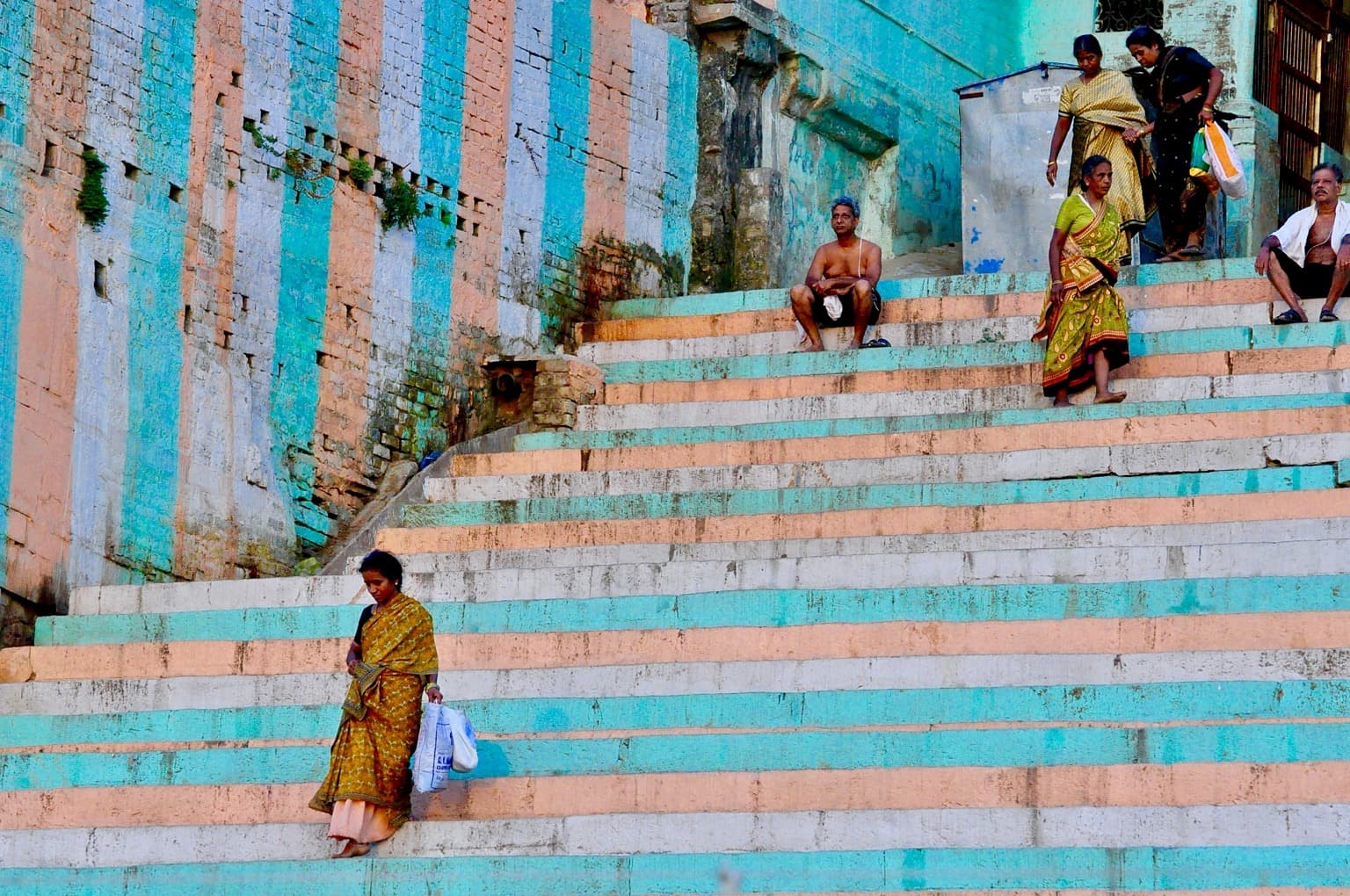
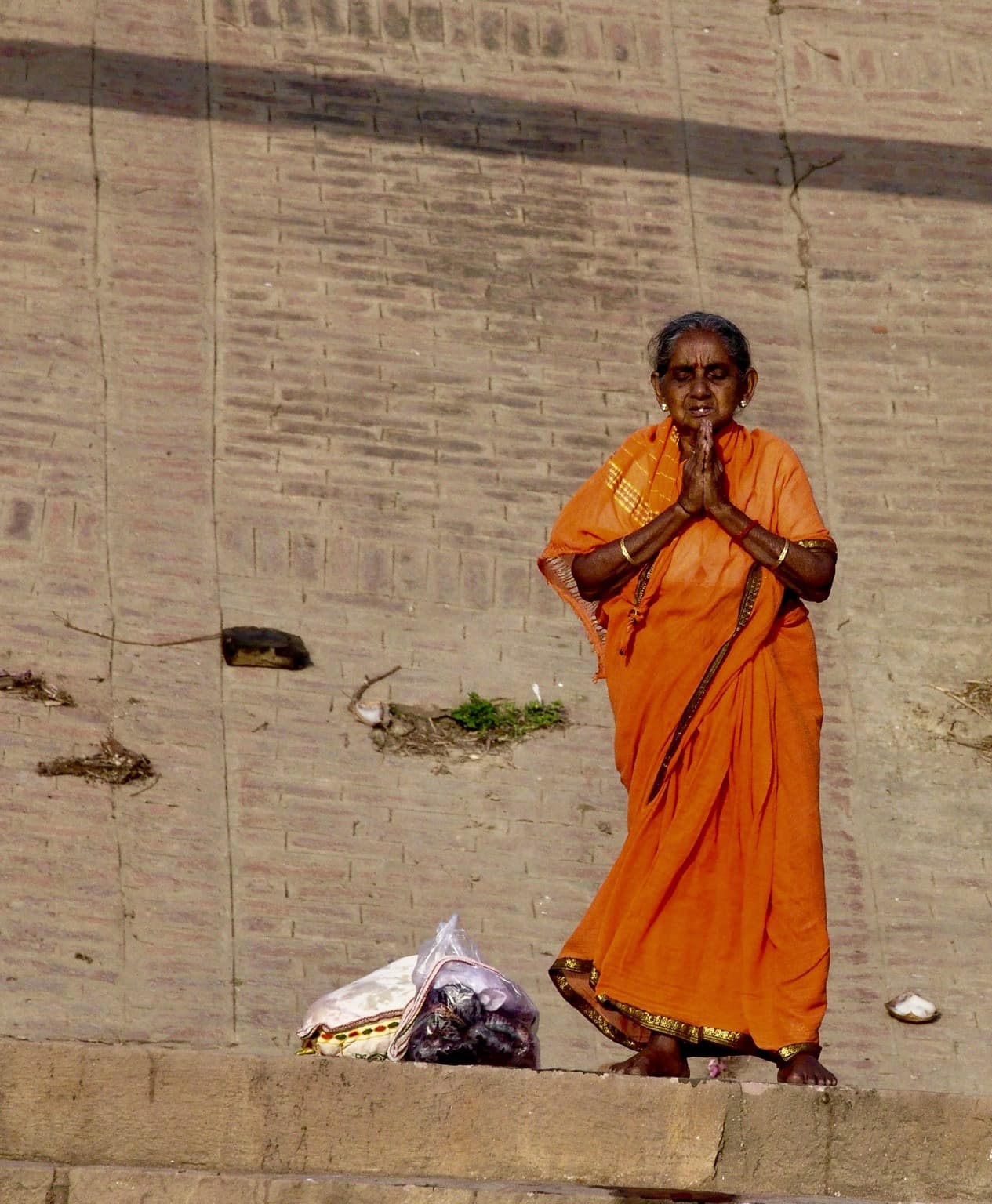
Saris and other garments can become the strongest colour in a riverfront scene. Because people are moving through broad areas of pale stone or muted water, clothing often functions as both documentary subject and visual anchor. The archive should describe the person and activity first rather than treating a garment merely as decorative colour.
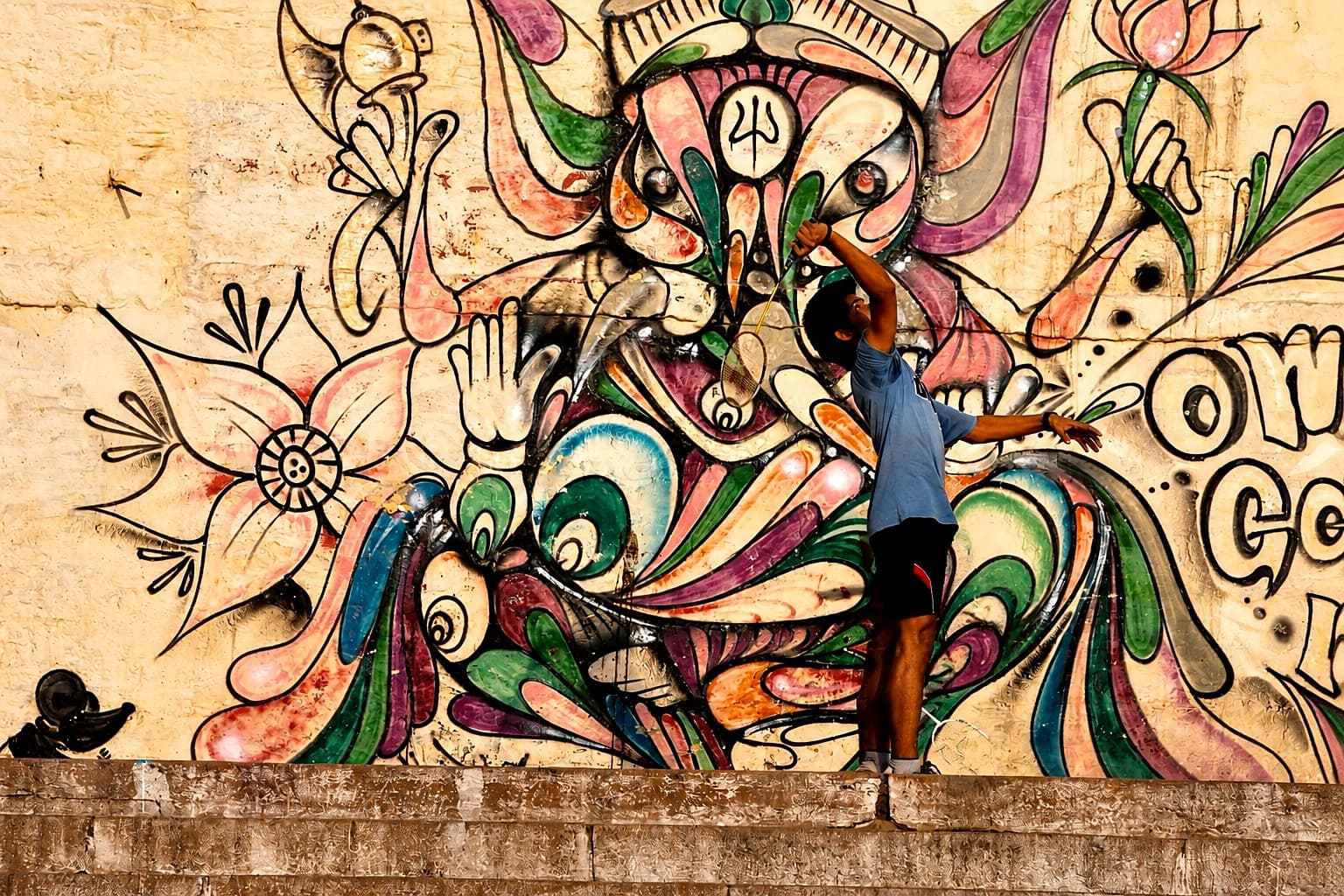
V-2014-620 is a useful example: a badminton player reaches in front of a painted Ganesha mural. The photograph is visually vivid because sacred imagery, painted surface and ordinary recreation coexist, not because the archive staged a “colourful India” scene.
Painted steps, walls, signs and shrines introduce bands and blocks of colour into the riverfront. Weathering prevents the effect from becoming uniform. New paint, faded paint, bare stone and human movement coexist in the same frame.
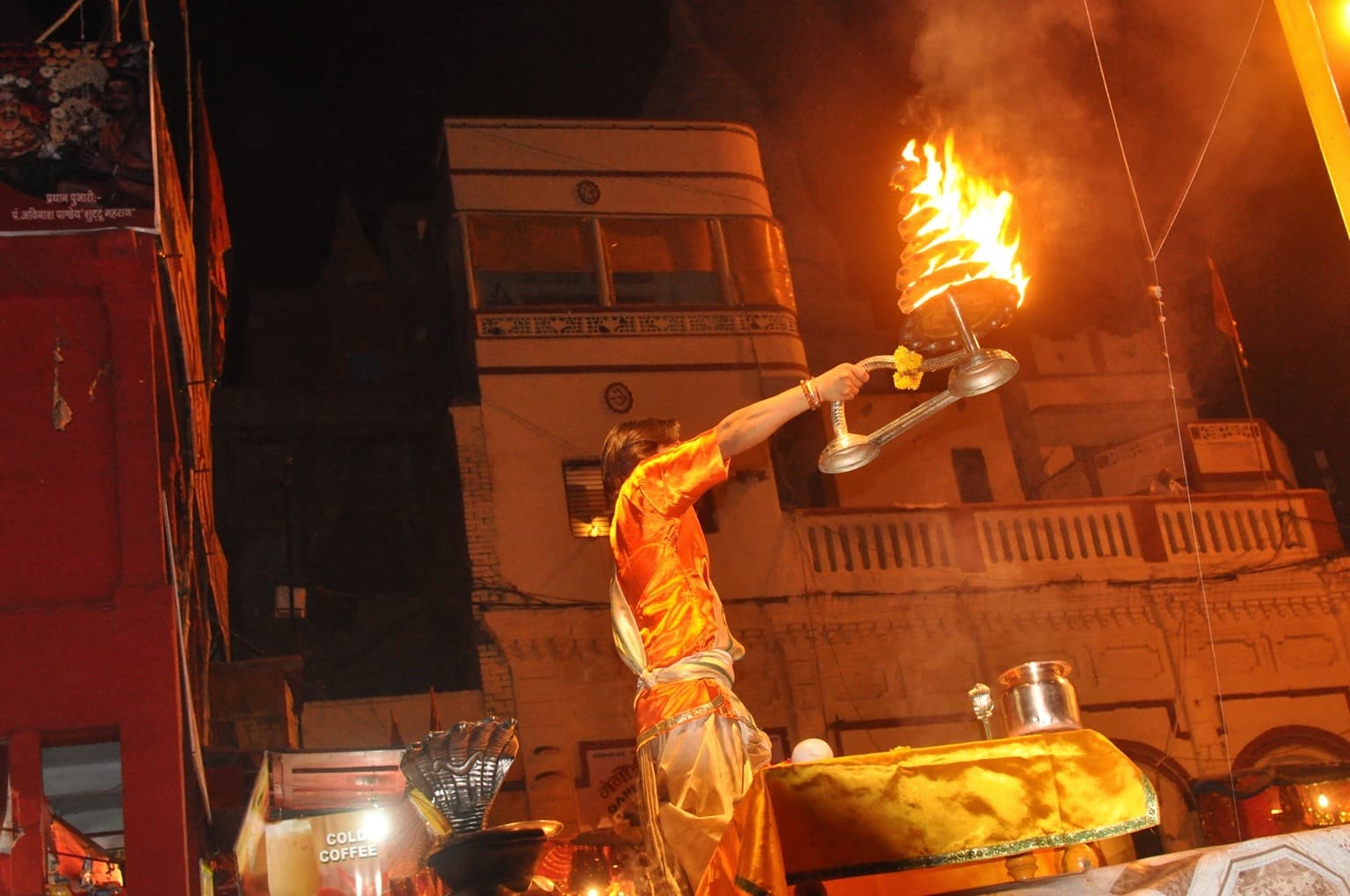
Evening aarti produces a different visual world. Brass lamps, flame, cloth and artificial light create warm concentrations of colour against darkness. The strong palette comes as much from light and contrast as from pigment.
This Varanasi article is deliberately specific. As other places in the archive are developed, Everyday Lives should ask the same questions locally: which colours come from textiles, which from architecture, which from religion or festival, which from labour and commerce, and which are intensified by the photographic conditions?
These sources support the historical and cultural context of this article. They are provided so interested readers, students and researchers can continue beyond the introductory text.
Related documentary material
Return to experience
Explore this place →Explore the Knowledge Centre →Read documentary stories →Continue discovering →