Two Wheels, a Longer Road to School
How bicycles can change access to education in rural India
In a small school in Khajuraho, India, I came across something that seemed quite unremarkable at first.
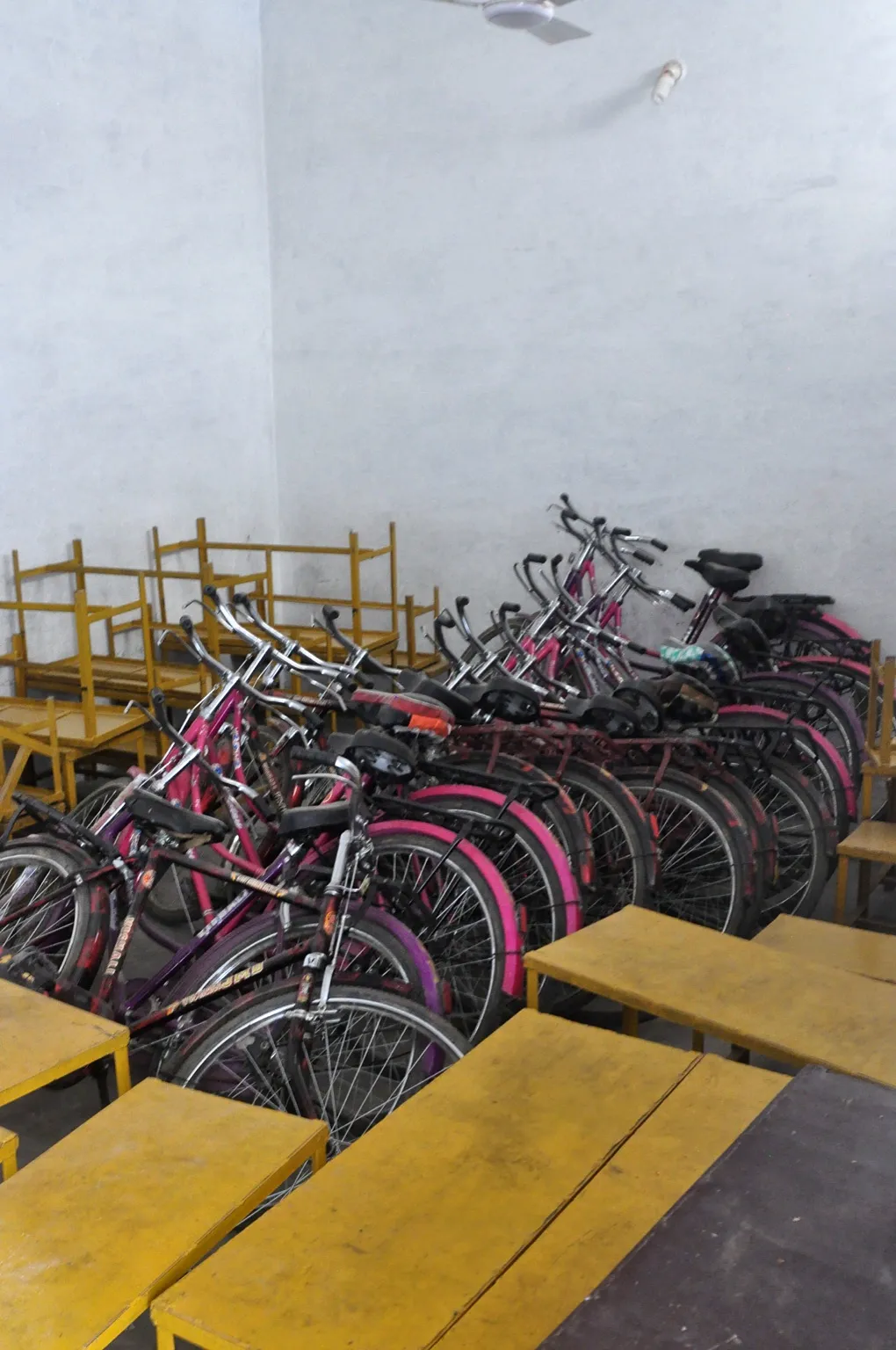
A collection of bicycles.
They were parked together in a classroom, their handlebars and wheels overlapping, surrounded by school desks.
I photographed them.
At home in Canada, I associated a bicycle with childhood independence, recreation and the pleasure of getting around the neighbourhood. Children might cycle to school, but others travelled by school bus, public transportation or in their parents' cars.
During my travels through rural India, I often saw schoolchildren cycling along country roads, sometimes in groups.
For many children, a bicycle could make the daily journey to school much more manageable.
The distance between home and education
The presence of a school does not necessarily mean every child can reach it easily.
In rural areas, the distance between villages and schools can present a significant obstacle, particularly as children progress beyond primary education.
A journey that takes considerable time on foot can be shortened by bicycle. For families with limited resources, cycling can offer transportation without recurring motor-vehicle fares. It can also provide children with a measure of independence.
An opportunity for girls
Bicycles have played a particularly interesting role in expanding educational opportunities for girls in India.
In 2006, Bihar introduced a programme providing financial assistance for bicycles to girls entering Grade 9.
Researchers Karthik Muralidharan and Nishith Prakash found that the programme increased girls' age-appropriate secondary-school enrolment by approximately 32% and reduced the corresponding gender enrolment gap by approximately 40%. The effects were especially pronounced farther from schools.
Their findings concern a specific programme in Bihar and secondary education, rather than the primary school I visited in Khajuraho. They nevertheless illustrate how access to transport can help address a practical obstacle to attending school.
Back to Khajuraho
The school I visited in April 2014 was Kashi Mandir School. Its teacher, Prabhat Mani Mishra, showed me the modest classrooms and explained some of the challenges of educating children from surrounding communities.
A fundraising account published in 2024 described a meeting with Prabhat, identifying him as the school's head. According to the account, the school had historically received support from a Dutch foundation and had previously provided bicycles to children who lived farther away.
I cannot say how far individual children travelled or who used the particular bicycles in my photograph.
But their presence in the classroom, and the school's reported history of providing them, illustrate a practical question with consequences well beyond this one village:
How does a child get to school when school is not just around the corner?
Sometimes part of the answer is surprisingly simple.
Two wheels and a pair of pedals.